

A million people move through the Iowa State Fair over eleven days. They’re hot, they’re carrying food on a stick, and they’re not there to shop for a swim spa. Most walk past every booth in the Varied Industries Building without stopping, and the ones who do stop are gone in ninety seconds. The businesses that win at events like this aren’t the ones with the best booth — they’re the ones who leave with names.
So for HotSpring Spas of Iowa’s State Fair campaign, we built something for people to do.
The Challenge: Attention, Then a Name
Two problems, stacked. First, get someone to stop. Second, get their contact information without it feeling like a sales trap — and get it into the CRM clean enough that the follow-up actually means something.
A clipboard and a bowl for business cards clears the first bar and fails the second. A QR code to a generic contact form fails both. What the campaign needed was a reason to engage that was genuinely fun, that ended somewhere useful, and that worked equally well standing at the booth or sitting at home after seeing a post.
The Spa & Snack Matchmaker
We built an interactive game that paired each player with two things: a floor model hot tub from the trucks on site, and one of the new foods debuting at the fair that year.
The mechanic is simple. Players answer a few questions about how they like to relax, spin an animated wheel, and get their match — a specific spa, actually available, plus a snack to go try while they’re on the grounds. It takes under a minute and it ends with a result people want to screenshot.
Why it works as a lead magnet:
- It’s about them, not the product. The questions are about how you unwind. The hot tub arrives as an answer to something the player already told us.
- The prize is real. Matches pull from the actual floor model inventory on the truck manifests, so the result is something a person could buy that week, not a generic product page.
- It’s local and timely. Pairing the spa with a new fair food made the whole thing feel like part of the fair rather than an ad running next to it.
- It earns the ask. By the time the form appears, the player has invested a minute and has a result they care about. Asking for an email at that moment is a fair trade — and it’s a better moment than any pop-up will ever get.
Wired Into HubSpot From the First Click
The game’s output isn’t a gimmick — it’s data.
Each player’s spa match and food match are written into hidden fields on the HubSpot form, so every lead lands in the CRM already tagged with which product they’re drawn to and how they answered. The sales team doesn’t get a list of email addresses; they get a list of people with a known product interest and a nearest store attached.
We then built the follow-up email in HubSpot to use those same values as personalization tokens, so the message a lead receives names their actual match instead of opening with “Thanks for your interest.” That’s the difference between a follow-up that gets opened and one that gets archived.
The whole thing runs inside their existing WordPress site as a self-contained widget — no new platform, no separate microsite, nothing for their team to maintain after the fair. When the fair ended, we swapped in a form-only version of the widget so the page kept capturing leads with the game retired.
The Campaign Around the Game
A good lead magnet with nothing driving traffic to it is a lead magnet nobody sees. The game was the centerpiece, but the campaign was the reason it worked:
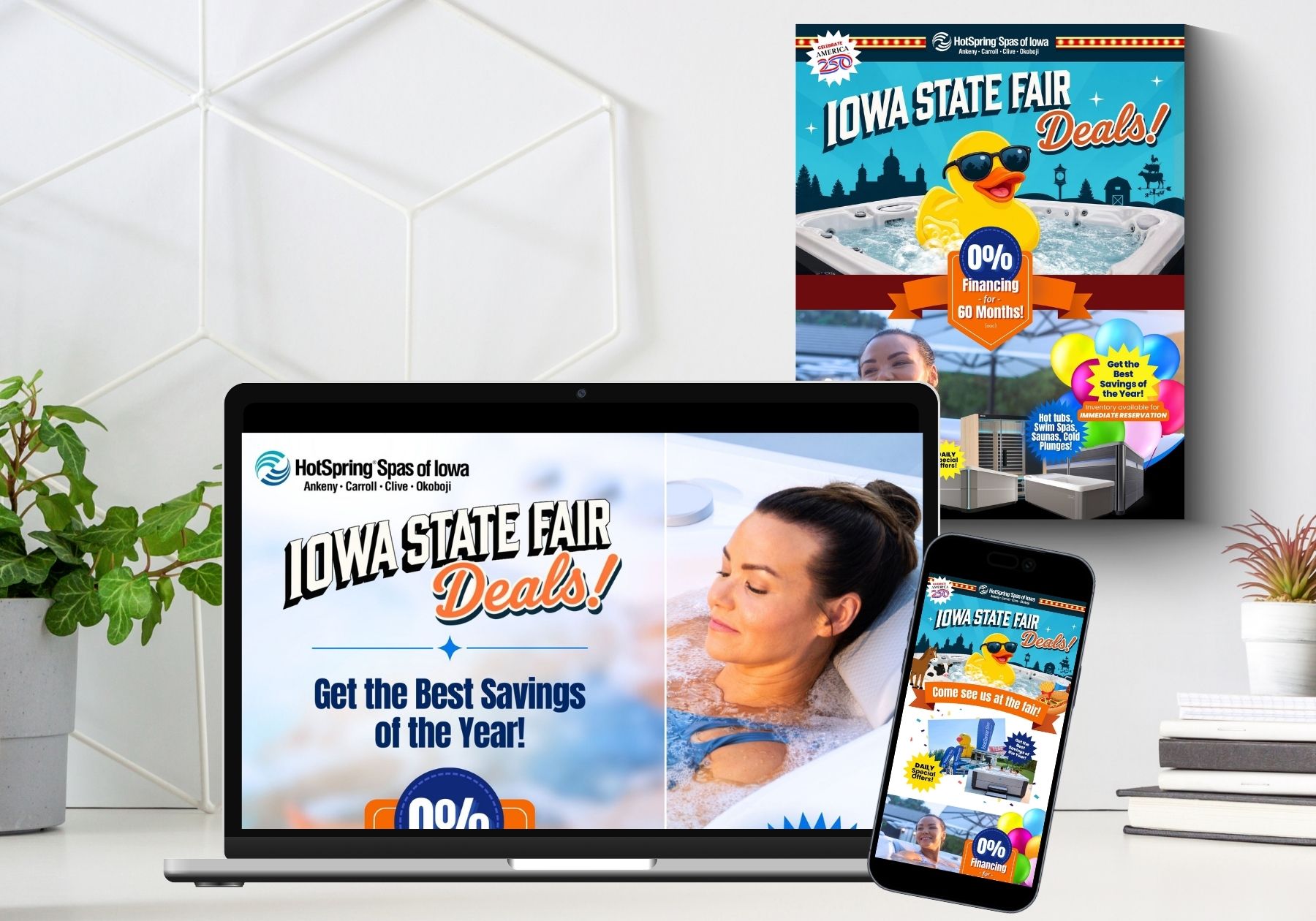
- A landing page carrying the full State Fair offer — 0% financing for 60 months (OAC), booth locations in the Varied Industries Building, and the full product lineup of hot tubs, swim spas, saunas, and cold plunges.
- Printed posters for the booth and the stores, matched to the digital creative so the campaign looked like one thing in every place a customer met it.
- Email campaigns, designed and scheduled in HubSpot, to their existing list before and during the fair.
- Social content, including custom Reels for Facebook and Instagram.
The social results are the part worth sitting with. Their typical post reached around a hundred views. The campaign Reels pulled thousands.
Why the Reels Outran Everything Else
Nothing changed about the audience — the change was in what they were given. The campaign content had a hook people already cared about (the fair), motion instead of a static graphic, and something to click through to that wasn’t just a product page. Content that connects to what your audience is already thinking about will always outrun content that only talks about you.
What This Looks Like for Your Business
You don’t need a state fair for this to apply. Any business with an event, a season, or a promotion can run the same play:
- Give people something to do, not something to read. Interaction earns contact information that a form alone never will.
- Tie it to something already on their mind — a local event, a season, a moment. Borrowed attention is the cheapest attention there is.
- Capture the answers, not just the email. A lead that arrives tagged with what they want is worth several that don’t.
- Wrap it in a real campaign. Landing page, print, email, and social all saying the same thing, at the same time.
- Plan for after. Every campaign needs a version of itself that keeps working once the event is over.
If you’ve got an event, a promotion, or a season coming up and no plan beyond “post about it,” that’s exactly the kind of thing worth building properly.
Got a campaign coming up? Book a call and let’s build something people actually want to click.